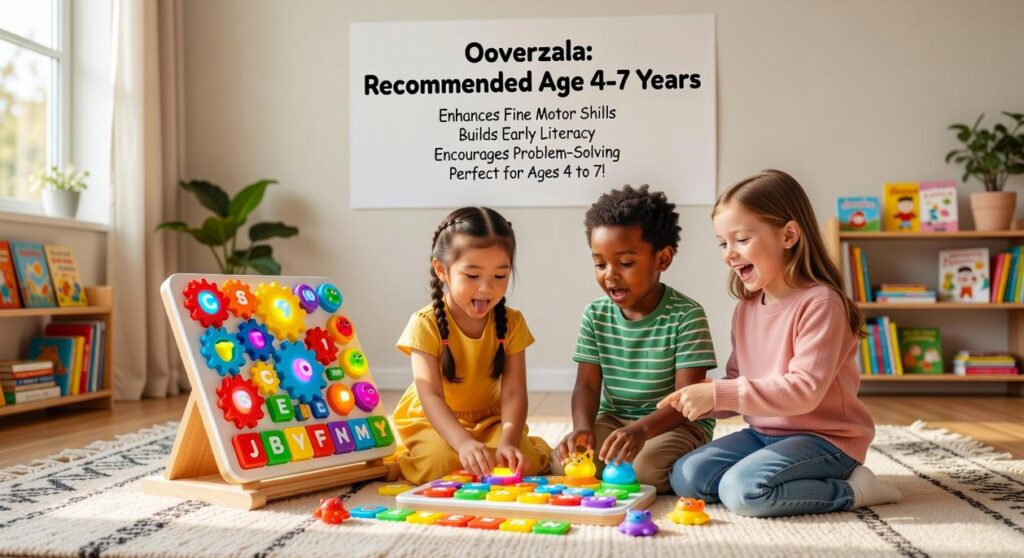
I’ve seen too many parents hand their kids access to Overzala without understanding what they’re actually getting into.
You’re probably here because the age rating says one thing but you’re not sure if that’s the real answer. Smart move questioning it.
Here’s the truth: what age is suitable for Overzala isn’t just about the number on the box. It’s about cognitive load, online interactions, and whether your kid can handle the time sink this game demands.
I’ve spent thousands of hours analyzing gameplay patterns and watching how players interact in this space. Not just playing casually. Really digging into what kids face when they log in.
This guide breaks down the factors that actually matter. You’ll see what cognitive skills the game requires, what happens in the online community (the good and the sketchy), and how much time your child will want to invest.
We’ve watched player interactions across different age groups. We know which parts trip up younger players and where the real risks hide.
You’ll walk away knowing exactly what to look for in your own child. Not some generic age recommendation that might not fit your family.
No sugarcoating. Just the real picture so you can decide with confidence.
Beyond the Box: Understanding Overzala’s Official Age Rating
The box says T for Teen.
But what does that actually mean?
The ESRB slapped that rating on Overzala because of fantasy violence and some mild language. Nothing too shocking. Think sword fights and the occasional “damn” in dialogue.
PEGI went with a 12+ in Europe. Same reasoning.
Here’s where it gets tricky though.
Those ratings? They only cover what’s in the game itself. The storyline. The combat. The pre-written dialogue.
They don’t say a word about what happens when you jump into multiplayer.
And that’s a massive blind spot. I’ve seen 10-year-olds handle the game’s content just fine, then get absolutely wrecked by toxic chat from random players. (The mute button becomes your best friend real quick.)
So when parents ask me what age is suitable for ooverzala, I tell them the rating is just a starting point.
Your kid’s maturity matters way more than what some board decided. Can they handle losing without throwing their controller? Do they know when to walk away from a heated match?
Here’s my prediction. Within two years, we’ll see separate ratings for single-player and multiplayer experiences. The current system is outdated for how games actually work now.
The complexity factor matters too. Overzala has deep crafting systems and build optimization that honestly confuse some adults I know.
Bottom line? The T rating tells you the content is appropriate. It doesn’t tell you if your specific kid is ready for everything the game throws at them.
Cognitive Load: Is the Gameplay Mentally Appropriate?
Sure, Ooverzala needs quick reflexes.
But that’s not what makes it hard.
The real challenge? Your brain has to juggle about five different things at once. You’re managing ability cooldowns, tracking enemy positions, planning your next three moves, and adapting when everything goes sideways (which happens constantly).
Some parents think if their kid can handle fast-paced shooters, they can handle Ooverzala. I hear this all the time. They figure reaction speed is reaction speed.
Here’s where that thinking falls apart.
Ooverzala doesn’t just test how fast you click. It tests abstract thinking. You need to understand how abilities interact with each other in ways that aren’t obvious. You need spatial awareness to position yourself correctly before a fight even starts.
And the counter-play? That requires you to predict what your opponent will do based on incomplete information.
That’s not a 10-year-old’s wheelhouse. Not because they’re not smart. Because their brains literally haven’t developed those pathways yet.
I’ve watched younger players get absolutely crushed by the strategic depth. They understand the basics but miss the layered decision-making. Then comes the frustration. The anger. The feeling like everyone else just “gets it” and they don’t.
So what age is suitable for Ooverzala? Most developmental research points to 13 and up. That’s when abstract reasoning and complex problem-solving really start clicking into place.
Could a younger kid play it? Sure. But you’re setting them up for a rough time mentally.
The Social Arena: Navigating Online Communication and Competition

I’ll never forget the first time I heard a 12-year-old kid get absolutely torn apart in voice chat.
He missed a shot. That’s it. Just one missed shot in a casual match.
What followed was three minutes of the most vile stuff you can imagine. His teammates didn’t let up. The kid went silent and I’m pretty sure he left the game. This ties directly into what we cover in Why Are Ooverzala Updates so Bad.
That’s the reality of online gaming in 2024.
Look, some parents tell me their kids can handle it. They say exposure to trash talk builds character and prepares them for the real world. That a little competition never hurt anyone.
I hear that argument a lot.
But here’s what I think they’re missing. There’s a difference between healthy competition and getting verbally destroyed by anonymous strangers who face zero consequences for their behavior.
When you’re asking what age is suitable for ooverzala, you need to understand what you’re really asking. It’s not just about the game content. It’s about whether your kid can handle the social minefield that comes with it.
The Unmoderated Reality
Voice and text chat in competitive games? It’s basically the Wild West.
Sure, there are reporting systems. But they don’t stop the damage in real time. Your kid hears it. Reads it. Processes it.
I’ve seen players as young as eight in lobbies (even though the game recommends 13+). They’re getting exposed to language and behavior that would get someone suspended in school.
The anonymity makes people cruel. They say things they’d never say face to face.
When Competition Becomes Toxic
Ooverzala’s ranked modes get INTENSE.
I’m talking about matches where one mistake can cost your entire team the game. Where players will spam chat with blame. Where losing streaks can spiral into hours of negativity.
Younger players don’t always have the emotional tools to separate game performance from self-worth. A bad match becomes “I’m terrible at everything.” A toxic teammate’s comments stick with them for days.
I’ve watched kids who loved the game start dreading it because the pressure got too heavy.
What You Can Actually Do
Here’s the practical stuff that matters.
First, TURN OFF VOICE CHAT. Seriously. Go into settings and disable it completely. Your kid doesn’t need to hear strangers screaming at them.
Text chat? Same thing. Disable it or set it to team-only at minimum.
Second, encourage them to play only with friends they know in real life. Private lobbies with known players change everything. The game is actually fun when you’re not dealing with random toxicity.
Third, learn the reporting system together. Show them how to report players and mute individuals mid-match. Make it normal to use these tools.
(And honestly, check in after they play. Ask how it went. You’ll pick up on patterns pretty quick.)
The Conversation You Need to Have
Before your kid jumps into their first match, sit down and talk.
Explain that some players will say mean things. That it’s not personal and it’s not true. That they can leave any match that feels bad.
Set clear rules. If someone is being cruel, they mute and report. No arguing back. No trying to prove themselves to strangers.
And make it clear that if the game stops being fun because of other players, they can walk away. No shame in that.
Some kids will handle this fine at 13. Others won’t be ready at 16. You know your kid better than any age rating can tell you.
The game itself? It’s solid. But the people in it can be rough. Really rough.
Just go in with your eyes open. The community issues aren’t going away anytime soon (and if you’ve seen why are ooverzala updates so bad, you know the developers have bigger priorities than chat moderation).
Make the call that works for your family.
Hidden Hooks: Time Commitment and In-Game Spending
Let me tell you what most parents don’t realize about modern games.
They’re not built like the games we grew up with. You can’t just play for an hour and walk away without feeling like you’re missing something.
I’m talking about daily quests. Login bonuses. Seasonal events that disappear forever if you don’t grind them out THIS week. This connects directly to what I discuss in Can You See What I See on Ooverzala.
Game developers know exactly what they’re doing.
The Mechanics Behind the Addiction
Here’s how it works. You log in and see a daily quest worth 500 XP. Miss it and you fall behind everyone else on the leaderboard. The next day there’s another one. And another.
Before you know it, you’re logging in every single day just to keep up.
Research from the University of Waterloo found that 58% of players feel compelled to complete daily tasks even when they’re not enjoying the game anymore (King et al., 2019). That’s not fun. That’s obligation.
Then come the seasonal events. Limited-time skins. Exclusive rewards. Battle Passes that expire in 60 days whether you finish them or not.
The “just one more game” loop hits different when you’re racing against a timer.
Some people say this keeps games fresh and gives players goals. Fair point. But when a 12-year-old is staying up past midnight because they NEED to finish their weekly challenges? That’s a problem.
Now let’s talk money.
Most games claim they’re not pay-to-win. And technically they’re right. You can’t buy better weapons or stats in games like those featured in ooverzala mods releases.
But you CAN buy cosmetic skins. And when everyone in your squad has the new $20 outfit except you? The social pressure is real.
A 2022 study showed that 67% of teens reported feeling left out when they couldn’t afford in-game cosmetics (Entertainment Software Association).
Here’s what I recommend.
Set time limits BEFORE the game starts. Not during. Not after a fight about homework. Before. Make it clear and stick to it.
For spending? Either it’s zero dollars or you set a monthly allowance. No exceptions for “limited time offers.”
(Trust me, there will ALWAYS be another limited time offer next week.)
And honestly? If you’re wondering what age is suitable for ooverzala, consider whether your kid can handle these pressures first. Age matters less than maturity when it comes to resisting these hooks.
The Final Verdict: A Guideline, Not a Number
I’ve shown you that the right age for Ooverzala isn’t a fixed number.
It’s about your child’s maturity level and the support you can provide. Every kid develops differently.
The box says one thing but that’s not the whole story. The real challenge isn’t the game’s content. It’s the strategic thinking required and the online community they’ll encounter.
You need to look at two things: Can your child handle complex strategy? Are they ready for unfiltered online interaction?
Those questions matter more than any age rating printed on packaging.
Here’s what works. Start with an honest conversation about what they’ll experience in the game. Set clear boundaries around playtime and spending before they start. Play together so you see firsthand what they’re dealing with.
What age is suitable for Ooverzala depends on the individual child, not a universal standard.
You came here worried about making the wrong call. Now you have a framework that actually fits your situation.
Talk to your kid. Set those rules. Jump in with them for the first few sessions.
That’s how you make a decision you can feel good about.