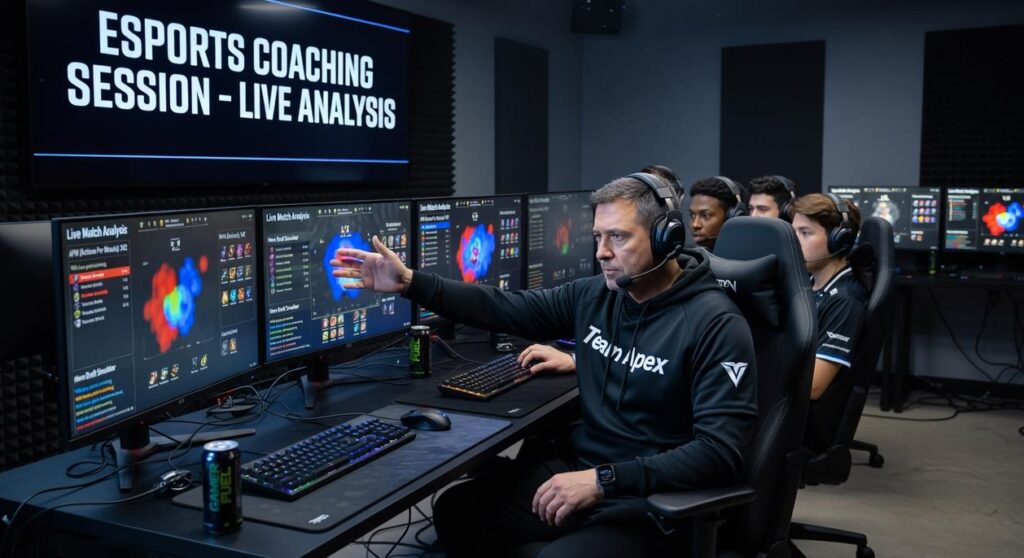
If you’re searching for deeper insight into competitive gaming, you’re likely looking for more than surface-level tips. You want to understand why top players make certain decisions, how elite teams adapt under pressure, and what mechanics truly separate high-tier competitors from the rest. This article delivers exactly that through focused esports coaching analysis, breaking down strategies, in-game adjustments, and optimization techniques that translate directly into better performance.
We draw from professional match reviews, high-level player data, and proven strategic frameworks used in competitive environments. Every breakdown is designed to be practical—whether you’re climbing ranked ladders, refining team coordination, or sharpening your individual mechanics.
By the end, you’ll have a clearer understanding of advanced decision-making, meta shifts, and performance optimization methods that serious players use to gain a competitive edge.
Unlock Your Peak Performance in Competitive Gaming
The difference between good and elite players is measured in milliseconds and micro-decisions. Grinding alone hits a wall. What breaks it? Structured esports coaching analysis that exposes blind spots you cannot see. When an expert reviews your gameplay, you gain CLARITY on positioning, timing, and decision-making. That means faster reactions, smarter rotations, and more wins under pressure. Instead of guessing, you follow a repeatable system for improvement. The payoff? Higher ranks, stronger teamwork, and CONFIDENCE in clutch moments. Stop plateauing and start performing at your absolute peak. Now. Earn consistent competitive advantages daily.
I still remember the first time I watched a replay of my own tournament match. I thought I’d played smart—aggressive when it mattered, cautious when it counted. Then my coach paused the VOD and quietly asked, “Why rotate there with no vision?” I didn’t have an answer. That was the moment I realized esports coaching is less about hype and more about precision.
At its core, esports coaching is a data-driven performance service. Individual player coaching targets mechanics (your raw execution skills), decision-making under pressure, positioning, and mental resilience. In other words, it turns “I felt it was right” into “I knew it was optimal.”
Meanwhile, team coaching shifts the lens outward. It builds communication protocols, refines macro play (large-scale, map-wide strategy), and strengthens role synergy. Think less solo carry fantasy, more Avengers-level coordination.
Then there’s VOD review—Video on Demand analysis—where patterns emerge. A coach spots habits you’re blind to mid-match (tunnel vision is real). Through esports coaching analysis, even small misuses of cooldowns or inefficient rotations become visible and correctable.
Finally, data analysis tracks KPIs like accuracy, APM (actions per minute), and resource efficiency. Numbers don’t tilt—they clarify. And once you see the gaps, improvement stops being guesswork and starts becoming intentional.
From Plateau to Podium: The Tangible Impact of Expert Coaching
Every competitive player hits a wall. The question is what happens next.
Do you keep grinding ranked matches and hope for a breakthrough—or do you bring in expert guidance?
Self-Teaching vs. Expert Coaching
Self-Teaching:
- Relies on trial and error
- Reinforces unnoticed bad habits
- Progress depends on guesswork
Expert Coaching:
- Identifies mechanical flaws immediately
- Prescribes targeted drills
- Compresses the learning curve dramatically
Accelerated improvement isn’t magic—it’s precision. A coach spots patterns you’re blind to (yes, even that “one small mistake” that costs rounds). In esports coaching analysis, structured feedback consistently reduces performance errors faster than solo review because correction is deliberate, not accidental.
Some argue that grinding alone builds resilience. And to be fair, repetition does create familiarity. However, repetition without correction simply automates mistakes. It’s the difference between practicing free throws blindly and having someone adjust your form mid-shot.
Beyond mechanics, coaching deepens strategic understanding. Instead of just reacting, you learn win conditions—how to control tempo (the pace of play), manage in-game economy (resource allocation systems), and force opponents into suboptimal decisions. That shift from reactive to proactive separates contenders from champions—see what separates amateur players from professionals (https://ooverzala.com/what-separates-amateur-players-from-professionals/).
Then there’s mindset. Tilt (emotional frustration that harms decision-making) and performance anxiety derail consistency. Coaches introduce reset routines and focus frameworks so you perform the same on stage as you do in scrims.
For teams, the comparison is even sharper: five opinions vs. one aligned strategy. A coach becomes the objective third party, mediating conflicts and turning chaotic practice into measurable progress.
Good try feels nice. Objective feedback wins tournaments.
Finding Your Mentor: How to Select the Right Esports Coach

Choosing the right esports coach isn’t just about credentials—it’s about fit, focus, and measurable growth (yes, like picking the right character for your comp). A structured approach saves time, money, and frustration.
Assess Your Specific Needs
Start with clarity. Are you grinding ranked solo queue, or preparing for coordinated tournament play? A solo player often needs mechanics refinement and decision-making feedback, while a team competitor may need strategy systems, communication drills, and VOD breakdown protocols. Define your goal first—improvement without direction is just expensive practice.
Vet Their Credentials and Experience
Look for proof, not promises. Strong coaches provide:
- Documented player improvements (rank increases, tournament placements)
- Clear progression plans
- Testimonials or case studies
Interestingly, their peak rank matters less than their results with students. Teaching and playing are separate skills (Michael Jordan wasn’t Phil Jackson). Solid esports coaching analysis should demonstrate patterns, not just opinions.
Analyze Their Coaching Style
Some players thrive under direct critique; others need collaborative review sessions. Book a trial session if possible. Pay attention to whether feedback is specific (“Your jungle pathing at 3:15 loses tempo”) versus vague (“You need better awareness”). Specificity equals growth.
Confirm Game and Role Specialization
A tactical FPS coach won’t automatically improve your MOBA macro. Seek role-specific expertise—IGL, Jungler, AWPer, Support—so advice directly applies to your in-game decisions.
Red Flags to Avoid
Be cautious of:
- Guaranteed pro claims
- No structured curriculum
- High fees without proof
- Inability to explain improvement methods
Features matter—but only when they clearly translate into performance gains.
Your First Session: What to Prepare and What to Expect
Preparation is EVERYTHING. Bring 2-3 recent VODs one clear win, one tight loss, and a match that felt confusing. Specific footage lets the coach run precise esports coaching analysis instead of guessing.
• Write down three concrete challenges and one measurable goal.
Sessions typically open with goal alignment, then shift into screen-shared review where key moments are paused, annotated, and reframed. You see exactly why a rotation failed or a cooldown was mistimed.
You should leave with 2-3 actionable adjustments to practice immediately, building skill through focused, targeted improvement fast.
Integrating professional analysis into your training regimen is how you stop rage-queuing and start leveling up. Plateaus are not boss battles; they’re feedback. Raw talent plus chaotic practice equals that awkward “why am I still stuck?” phase (we’ve all been there). A structured system gives you an objective roadmap, turning weaknesses into strengths one review at a time. Think of esports coaching analysis as game tape for your brain.
Start recording matches and grading yourself honestly (yes, even that missed ultimate).
| Focus Area | Action |
| Mechanics | Aim drills |
| Decision-Making | VOD review |
Pick one skill, research specialists, and commit. Progress follows.
By utilizing advanced metrics and tools, coaches can dissect gameplay at the highest level, a process further enhanced by insights from articles like ‘Settings Lcfgamestick‘ that detail optimal configurations for peak performance.
Level Up Your Competitive Edge
You came here to sharpen your understanding of high-level gameplay, strategy execution, and the mechanics that separate casual players from true competitors. Now you have a clearer picture of how advanced tactics, optimized builds, and smarter decision-making can transform your performance.
The reality is this: staying stuck at the same rank, repeating the same mistakes, and missing critical in-game opportunities is frustrating. Without structured improvement and deeper insight, progress feels random instead of repeatable. That’s the gap serious players must close.
The next step is simple—apply what you’ve learned and go deeper with structured esports coaching analysis to identify weaknesses, refine mechanics, and optimize every competitive edge. Don’t just play more. Train smarter.
If you’re ready to break plateaus and compete with confidence, start implementing these strategies today and seek out expert-level breakdowns that have helped countless players elevate their game. Your climb starts with the decision to improve deliberately—make that move now.