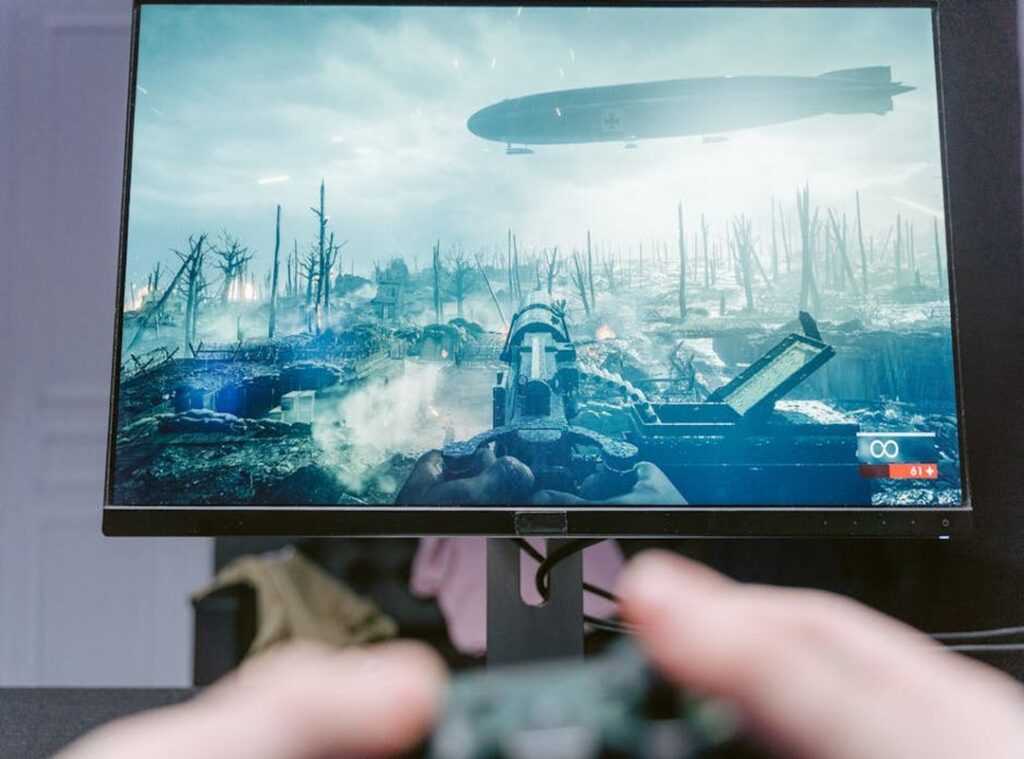
If you’re searching for the best graphics settings for performance, you’re probably tired of lag spikes, frame drops, or gameplay that just doesn’t feel smooth when it matters most. Whether you’re grinding ranked matches or exploring massive open worlds, performance isn’t just a luxury — it’s a competitive advantage.
This guide is built to help you get the most out of your hardware without sacrificing visual clarity. We break down which settings actually impact FPS, which ones are safe to lower, and which tweaks deliver the biggest performance gains with minimal visual loss. No vague advice. No recycled tips.
Our recommendations are based on in-depth testing across different hardware setups, careful analysis of in-game performance metrics, and practical experience optimizing demanding titles. By the end of this article, you’ll know exactly how to fine-tune your settings for smoother gameplay, faster response times, and a more consistent competitive edge.
From Lag to Legend: Unlocking Your PC’s True Gaming Potential
To achieve the perfect balance between stunning visuals and smooth gameplay, it’s essential to explore the best graphics settings, which you can further optimize by checking out our article on Lcfgamestick Resolution Settings.
You don’t need a new GPU. You need smarter tuning.
Most guides repeat the same surface-level tips. Let’s go deeper—into the settings competitive benchmarks actually show moving the needle (measured in consistent 1% low FPS, not just peak frames, per NVIDIA performance guides).
Start here:
- Shadows: Lower to Medium (huge GPU strain, minimal gameplay gain)
- Ambient Occlusion: Disable or SSAO only
- Anti-Aliasing: Use TAA or DLSS/FSR instead of MSAA
- Texture Quality: Keep High if VRAM allows
This is how you find the best graphics settings for performance without turning your game into a 2005 throwback (unless that’s the vibe).
Pro tip: Optimize for frame consistency, not just averages.
The FPS Killers: Identifying the Most Demanding Graphics Settings
When players search for the best graphics settings for performance, they usually blame resolution first. Fair—but that’s rarely the real villain. Three settings quietly drain your frames harder than a final boss phase.
Shadow Quality
Dynamic shadows require your GPU (Graphics Processing Unit—the chip that renders visuals) to calculate light sources, object positions, and movement in real time. Every flickering torch or swaying tree multiplies that workload.
Some argue shadows are essential for immersion—and they are. But dropping from Ultra to High can net up to a 15% FPS boost with barely noticeable visual loss (especially during fast gameplay). Ultra often increases shadow resolution you won’t notice mid-firefight (unless you’re stopping to admire tree bark).
Pro tip: Lower shadow distance before lowering resolution.
Anti-Aliasing (AA)
Aliasing is the “jagged edge” effect on objects. AA smooths it out.
- FXAA (Fast Approximate AA): Lightweight, minimal FPS hit, slightly blurry.
- MSAA (Multisample AA): Sharp but extremely demanding—renders edges multiple times.
- TAA (Temporal AA): Uses data from previous frames to smooth edges efficiently.
Critics say TAA causes ghosting. True in older titles. But in most modern engines, TAA offers the best balance between clarity and performance.
Texture Quality
Textures rely on VRAM (Video Random Access Memory—your GPU’s memory pool). If you exceed it, stuttering begins.
- 4GB VRAM? Stick to Medium.
- 6GB–8GB? High is safe.
- 10GB+? Ultra is viable.
Contrary to popular belief, high textures don’t always lower FPS—running out of VRAM does. Match the setting to your hardware, and your frames will thank you.
Beyond the Basics: Fine-Tuning for a Competitive Edge

First up, let’s talk about Screen Space Reflections (SSR) and Ray Tracing. These are lighting techniques that simulate how light bounces and reflects off surfaces. SSR fakes reflections using what’s already on your screen, while ray tracing physically simulates light paths for ultra-realistic results. Sounds amazing, right? It is—until your frame rate nosedives like a failed stunt in an action movie. Because both features are GPU-intensive (meaning they demand serious graphics card power), they’re the first settings you should disable when chasing smoother gameplay. Yes, puddles won’t mirror your character’s haircut perfectly. You’ll survive.
Next, Anisotropic Filtering (AF). This setting sharpens textures viewed at sharp angles—like roads stretching into the distance. Without it, surfaces can look blurry or muddy. The good news? AF has a very low performance impact on modern GPUs. In fact, setting it to 16x typically costs almost nothing in FPS. So go ahead and max it out. It’s basically free visual clarity (the rare win-win in graphics settings).
Then there are post-processing effects—Motion Blur, Depth of Field, and Bloom. These are stylistic filters layered on top of the image. Motion Blur mimics camera streaking, Depth of Field blurs backgrounds, and Bloom adds glow to bright lights. Cinematic? Sure. Competitive? Not always. Disabling them often improves clarity and grants a modest FPS boost.
If you’re hunting for the best graphics settings for performance in the section once exactly as it is given, start here and tweak wisely.
The Universal Settings: What V-Sync and Resolution Mean for You
First, let’s tackle V-Sync (Vertical Synchronization)—a setting that matches your game’s frame rate to your monitor’s refresh rate. When they’re out of sync, you get screen tearing, where two frames appear split across the screen (it looks like your game had a bad Photoshop edit). V-Sync fixes this, but it can add input lag—the delay between your action and what you see.
Technologies like G-Sync (NVIDIA) and FreeSync (AMD) dynamically sync refresh rates without as much lag. In theory, they’re the best of both worlds. In practice, results vary by monitor and GPU—I’ve seen setups where the difference is night and day, and others where it’s barely noticeable.
So when should you use it? For cinematic single-player games, V-Sync or adaptive sync is great. For competitive multiplayer, consider disabling it to prioritize responsiveness (see reducing input lag practical optimization tips: https://ooverzala.com/reducing-input-lag-practical-optimization-tips/).
Next, resolution vs. render scale. Resolution is your display’s pixel count (like 1440p). Render scale adjusts how many pixels the game internally renders. For example, play at 1440p but set render scale to 90%—you’ll gain FPS without making the UI blurry. It’s often one of the best graphics settings for performance, though clarity trade-offs depend on the game.
Your Step-by-Step Optimization Checklist
Step 1: Establish a Baseline.
First, measure before you tweak. Use in-game benchmarks or tools like MSI Afterburner (a free performance monitor that tracks FPS, temps, and usage) to record your current frame rate. Without this baseline, you’re guessing. And honestly, guessing is how settings spiral out of control.
Step 2: The “Big Three” Tweak.
Next, adjust Shadows, Anti-Aliasing (which smooths jagged edges), and Textures. These typically have the biggest performance impact. Many players swear there’s one universal preset for the best graphics settings for performance, but hardware differences make that debatable.
Step 3: The Fine-Tuning Pass.
Then disable unnecessary post-processing like motion blur or film grain. Tweak secondary settings gradually.
Step 4: Test and Iterate.
Finally, retest. The goal isn’t the highest FPS spike—it’s a stable frame rate. I can’t promise perfection, but steady performance usually beats flashy numbers.
Achieve Smoother Gameplay Today
You’re in control now. Like Neo seeing the Matrix, you understand what each toggle really does. Dial in the best graphics settings for performance, skip the presets, and watch stutter vanish. Load your favorite game, test, tweak, and feel that buttery smooth difference immediately right now.
Unlock Smoother Gameplay with the Right Settings
You came here looking for clarity on best graphics settings for performance, and now you know exactly how to fine-tune your setup for smoother gameplay, higher FPS, and a competitive edge. No more second-guessing which options to lower or which settings actually matter.
Lag spikes, frame drops, and inconsistent performance can ruin even the best matches. When your settings aren’t optimized, you’re not just losing frames — you’re losing reaction time, accuracy, and momentum. That frustration ends when you apply the right performance-focused adjustments.
Now it’s time to act. Jump into your game, apply the optimized settings you’ve learned, and test your new frame stability in a live match. If you want deeper breakdowns, advanced optimization tricks, and pro-level strategy insights trusted by thousands of competitive players, explore our latest guides and start optimizing like a pro today. Your smoother, faster gameplay starts now.
 Lead Game Analyst
Ask Manuelanismo Miles how they got into game optimization tricks and you'll probably get a longer answer than you expected. The short version: Manuelanismo started doing it, got genuinely hooked, and at some point realized they had accumulated enough hard-won knowledge that it would be a waste not to share it. So they started writing.
What makes Manuelanismo worth reading is that they skips the obvious stuff. Nobody needs another surface-level take on Game Optimization Tricks, Gaming Tactics and Techniques, Hot Topics in Gaming. What readers actually want is the nuance — the part that only becomes clear after you've made a few mistakes and figured out why. That's the territory Manuelanismo operates in. The writing is direct, occasionally blunt, and always built around what's actually true rather than what sounds good in an article. They has little patience for filler, which means they's pieces tend to be denser with real information than the average post on the same subject.
Manuelanismo doesn't write to impress anyone. They writes because they has things to say that they genuinely thinks people should hear. That motivation — basic as it sounds — produces something noticeably different from content written for clicks or word count. Readers pick up on it. The comments on Manuelanismo's work tend to reflect that.
Lead Game Analyst
Ask Manuelanismo Miles how they got into game optimization tricks and you'll probably get a longer answer than you expected. The short version: Manuelanismo started doing it, got genuinely hooked, and at some point realized they had accumulated enough hard-won knowledge that it would be a waste not to share it. So they started writing.
What makes Manuelanismo worth reading is that they skips the obvious stuff. Nobody needs another surface-level take on Game Optimization Tricks, Gaming Tactics and Techniques, Hot Topics in Gaming. What readers actually want is the nuance — the part that only becomes clear after you've made a few mistakes and figured out why. That's the territory Manuelanismo operates in. The writing is direct, occasionally blunt, and always built around what's actually true rather than what sounds good in an article. They has little patience for filler, which means they's pieces tend to be denser with real information than the average post on the same subject.
Manuelanismo doesn't write to impress anyone. They writes because they has things to say that they genuinely thinks people should hear. That motivation — basic as it sounds — produces something noticeably different from content written for clicks or word count. Readers pick up on it. The comments on Manuelanismo's work tend to reflect that.