Winning consistently in today’s competitive gaming landscape takes more than fast reflexes and solid mechanics. Players searching for an edge want clear, actionable insights they can apply immediately—whether that means refining their builds, understanding core systems, or mastering mid-match strategy adaptation when the pressure is on.
This article breaks down the mechanics and tactical decisions that separate average players from high-level competitors. We focus on practical strategy, in-game optimization, and real scenarios that demand quick thinking and calculated adjustments. If you’re looking to understand not just what works, but why it works, you’re in the right place.
Our insights are grounded in deep analysis of gameplay systems, competitive trends, and proven player techniques. By combining mechanical breakdowns with strategic context, we provide guidance you can trust—and apply immediately in your next match.
Reading the Board in Real Time
Your opening works—until it doesn’t. The moment an opponent deviates, you need mid-match strategy adaptation. Start with the OODA Loop: Observe (gather fresh information), Orient (interpret positioning and tempo), Decide (choose a counter-plan), Act (execute decisively). For example, if a rival turtles defensively, shift from aggression to resource control. Then, reassess every few turns. Instead of forcing combos, probe weaknesses with low-risk moves. Meanwhile, track patterns: Do they panic under pressure? Pro tip: narrate your loop internally to stay objective. Adaptation isn’t chaos; it’s controlled, continuous recalibration. Stay flexible, not stubborn, under fire. Always.
Reading the Digital Battlefield: How to Spot an Opponent’s Strategy
Information is power. In competitive games, scouting, map awareness, and kill-feed analysis aren’t optional skills—they’re intelligence systems. The minimap shows rotations before they become flanks. The kill feed reveals weapon buys, ultimate trades, and tempo swings in real time. In titles like Counter-Strike 2, spotting three rifles on a low-economy round signals a force buy. In League of Legends, a missing jungler plus deep vision disappearance often telegraphs an objective setup (yes, the dragon isn’t “random”).
Identifying Patterns vs. Noise
Not every strange move is a master plan. A lone aggressive push could be a misclick—or bait. Patterns repeat; noise doesn’t. If an RTS opponent consistently skips early military for a second base, that’s a fast expand economic build. If they suddenly cancel workers and mass units, that’s likely an all-in rush—a high-risk attack designed to end the game early. Recognizing repetition enables faster mid-match strategy adaptation.
Genre-Specific Cues That Matter
- RTS/4X: Watch tech structures and resource timing. A delayed upgrade can mean hidden tech (think StarCraft II cloaked units). Benefit: you counter before the surprise hits.
- MOBA/Hero Shooters: Track ultimate cooldowns and item deviations. An early armor stack suggests physical damage respect. Benefit: adjust team fights accordingly.
- FPS: Note positioning and buy rounds. Aggressive site takes after eco losses often signal desperation momentum plays. Benefit: anchor defensively and punish overextension.
Some argue instinct outweighs analysis. Instinct matters—but informed instinct wins more often (chess clocks don’t lie). Read the details, win the duel.
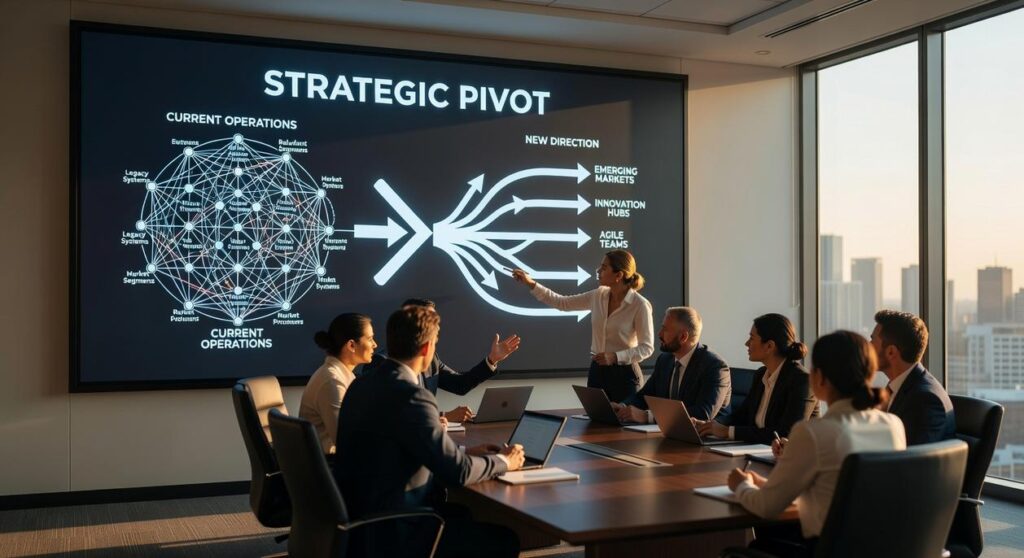
The Decision-Making Framework: When and How to Pivot
Great players aren’t just mechanically sharp—they’re decisively flexible. The real edge isn’t raw skill; it’s knowing when to change course.
The “If-Then” Mental Model
An If-Then model is a pre-built decision tree: If X happens, then I respond with Y. It reduces hesitation and prevents emotional overreactions.
For example:
- If the enemy rushes early, then turtle and scale.
- If your opponent burns mobility cooldowns, then force the duel.
This isn’t guesswork—it’s cognitive load reduction. Research in performance psychology shows pre-commitment frameworks speed reaction time under pressure (Baumeister & Tierney, 2011). In high-ELO lobbies, milliseconds matter.
Most guides stop at “be adaptable.” The real advantage? Build your If-Then tree before queueing. That’s mid-match strategy adaptation done proactively, not reactively. (Yes, that’s the difference between panic and poise.)
Resource Management as a Catalyst
Your economy, cooldowns, and positioning capital dictate viable pivots. A counter-strategy without resources is fantasy.
In an FPS, swapping angles works only if you have utility left. In an RTS, switching tech paths requires surplus income. Opportunity cost—what you sacrifice by choosing one option over another—determines whether a pivot is smart or suicidal.
Pro tip: Track one key limiting resource per match. When it spikes or dips, reassess immediately.
Calculating Risk vs. Reward
Small tweak or full overhaul?
- Minor Tweak Example: Changing your angle of attack in an FPS to exploit timing.
- Major Shift Example: Rebuilding your unit composition in an RTS to counter air dominance.
A tweak adjusts execution. A shift alters identity.
Some argue sticking to your strengths is safer. And consistency does win games. But stubbornness isn’t consistency—it’s plan rigidity. Behavioral economists call this the sunk cost fallacy (Arkes & Blumer, 1985): we stick with failing plans because we’ve invested in them.
Breaking free requires objective checkpoints. If three engagements fail for the same reason, pivot.
For a deeper breakdown, explore risk vs reward decision making frameworks in high level play.
Flexibility isn’t chaos. It’s structured adaptation—built before the fight begins.
Executing the Counter-Play: Practical Adjustment Techniques
Great players don’t just follow a game plan—they BREAK it when necessary. Counter-play is the art of recognizing what your opponent wants to do and deliberately disrupting it.
Tempo and Pacing Control
Tempo refers to the speed at which a match unfolds. Some comps scale late; others spike early. By accelerating or slowing the pace, you attack their win condition directly. For example, forcing early team fights in a MOBA to punish a late-game focused enemy team shifts the timeline before they’re ready. Think of it like pressing fast-forward on a movie villain’s master plan.
Critics argue that forcing tempo is reckless and leads to overextensions. Fair. But controlled aggression—vision secured, cooldowns tracked—turns “reckless” into calculated pressure (big difference).
Baiting and Conditioning
Conditioning means training your opponent to expect a pattern. Show pressure top lane three times, then rotate bot when they pre-rotate. Example: Showing a small force on one side of an RTS map to draw their army, while your main force attacks their undefended base. Classic misdirection—very “Ocean’s Eleven,” but with siege tanks.
Pro tip: Track how quickly they respond. Fast rotations signal confidence; slow ones hint at hesitation.
The Hard Counter
A hard counter directly nullifies an opponent’s core strength. Sometimes that means dropping your comfort pick. Painful? Yes. Necessary? Often. Mid-match strategy adaptation wins tournaments.
Some argue mastery beats counter-picking. Long term, maybe. But I predict future metas will reward flexibility over loyalty, especially as balance patches arrive faster. Adaptability isn’t optional—it’s survival.
Static plans crumble against dynamic opponents. I’ve seen it happen in everything from ranked shooters to weekend strategy sessions. The fix isn’t talent; it’s training.
Here’s what works:
- Observe patterns before forcing plays
- Apply a simple decision framework
- Commit to decisive counter-moves
This is mid-match strategy adaptation at its finest. And yes, it’s learnable. I firmly believe most players lose because they refuse to adjust (comfort feels safer than growth).
Start small. Make one smart tweak per game. Tonight, load up your favorite title and focus on reading and reacting once, not winning. Progress compounds faster than you think. Seriously.
Understanding how top players adapt their strategies mid-match can shed light on why they often seem to thrive even when distractions, like the notorious Ooverzala updates discussed in our earlier article, threaten to disrupt their game flow – for more details, check out our Why Are Ooverzala Updates so Bad.
Level Up Your Gameplay With Smarter Strategy
You came here looking for clarity on how to sharpen your gameplay, make smarter decisions, and gain a real competitive edge. Now you understand the mechanics, the tactical adjustments, and the importance of mid-match strategy adaptation when the pressure is on.
The biggest frustration for most players isn’t lack of effort — it’s knowing what to change and when to change it. Falling behind because you reacted too late or stuck to a failing plan is what costs matches. Applying what you’ve learned here ensures you’re no longer guessing — you’re adjusting with purpose.
Now it’s time to act. Start reviewing your recent matches, identify where adaptation could have shifted momentum, and deliberately practice faster tactical shifts in your next sessions. Players who consistently refine their approach outperform those who rely on autopilot.
If you’re serious about climbing ranks, mastering mechanics, and outplaying smarter opponents, don’t stop here. Dive deeper into advanced breakdowns, optimization tricks, and pro-level insights trusted by competitive players. Start implementing these strategies today and turn every match into a calculated win.
 Founder & Chief Gaming Strategist
Kaelric Yelthorne writes the kind of hot topics in gaming content that people actually send to each other. Not because it's flashy or controversial, but because it's the sort of thing where you read it and immediately think of three people who need to see it. Kaelric has a talent for identifying the questions that a lot of people have but haven't quite figured out how to articulate yet — and then answering them properly.
They covers a lot of ground: Hot Topics in Gaming, Game Optimization Tricks, Pro Perspectives, and plenty of adjacent territory that doesn't always get treated with the same seriousness. The consistency across all of it is a certain kind of respect for the reader. Kaelric doesn't assume people are stupid, and they doesn't assume they know everything either. They writes for someone who is genuinely trying to figure something out — because that's usually who's actually reading. That assumption shapes everything from how they structures an explanation to how much background they includes before getting to the point.
Beyond the practical stuff, there's something in Kaelric's writing that reflects a real investment in the subject — not performed enthusiasm, but the kind of sustained interest that produces insight over time. They has been paying attention to hot topics in gaming long enough that they notices things a more casual observer would miss. That depth shows up in the work in ways that are hard to fake.
Founder & Chief Gaming Strategist
Kaelric Yelthorne writes the kind of hot topics in gaming content that people actually send to each other. Not because it's flashy or controversial, but because it's the sort of thing where you read it and immediately think of three people who need to see it. Kaelric has a talent for identifying the questions that a lot of people have but haven't quite figured out how to articulate yet — and then answering them properly.
They covers a lot of ground: Hot Topics in Gaming, Game Optimization Tricks, Pro Perspectives, and plenty of adjacent territory that doesn't always get treated with the same seriousness. The consistency across all of it is a certain kind of respect for the reader. Kaelric doesn't assume people are stupid, and they doesn't assume they know everything either. They writes for someone who is genuinely trying to figure something out — because that's usually who's actually reading. That assumption shapes everything from how they structures an explanation to how much background they includes before getting to the point.
Beyond the practical stuff, there's something in Kaelric's writing that reflects a real investment in the subject — not performed enthusiasm, but the kind of sustained interest that produces insight over time. They has been paying attention to hot topics in gaming long enough that they notices things a more casual observer would miss. That depth shows up in the work in ways that are hard to fake.